
Key Takeaways
-
Vibe coding uses natural language prompts to generate Roblox game logic and assets instantly, so you skip manual scripting.
-
Roblox enforces strict polycount limits, especially on mobile, to maintain 60 FPS. Exceeding them causes lag and crashes.
-
You can follow a 7-step workflow: ideate, code mechanics, generate low-poly assets, apply LOD, rig and animate, playtest, then export to Studio.
-
Tools like Nilo provide real-time LOD control, Roblox-ready exports, and connected workflows that help you ship lag-free games faster.
How Vibe Coding Works in Roblox
Vibe coding means you create games through natural language prompts instead of traditional scripting. You talk, type, or even send images to the AI, and it turns your ideas into working content. You say what you want, like “add speed boost when player touches this part” or “make NPCs follow the player,” and the AI generates Lua code on the spot.
Tools like Rojo and different Roblox Studio plugins support this style, but they often produce inefficient code that increases lag and polygon counts. Roblox’s March 2026 Creator Monthly update introduced AI-powered mesh generation with triangle count controls. That update shows how Roblox wants you to use AI while still respecting performance rules. The key challenge comes when AI tools ignore Roblox’s strict optimization requirements, especially polycount limits that decide whether your game runs smoothly on mobile.
Roblox Polycount Limits You Should Watch
Roblox’s triangle count guidelines give you a baseline for games that feel smooth instead of laggy. Here is the big picture:
|
Asset Type |
Mobile Limit |
PC/Console Limit |
Source |
|---|---|---|---|
|
Individual Mesh |
Lower triangle counts recommended |
Higher triangle counts may be acceptable |
Roblox DevForum |
|
Character Model |
Keep low for performance |
Keep low for performance |
Roblox DevForum |
|
Scene Total |
Manage for performance |
Manage for performance |
Roblox DevForum |
When your assets go past these guidelines, players see frame drops, longer load times, and crashes on mobile. Roblox’s mesh streaming update helps by lowering detail for distant objects with Level of Detail systems, so close objects stay sharp while far ones use fewer triangles.
7-Step Workflow for Vibe Coding Low-Poly Roblox Games
This 7-step workflow helps you build lag-free Roblox games using vibe coding plus smart triangle control.
1. Shape Your Game Concept Clearly
Start with a clear vision of what you want to build. Maybe you are planning an obby, a tycoon, or a roleplay world. Sketch your ideas or gather reference images so the AI understands your style. Modern AI tools like Nilo accept text, sketches, and images, which helps the system match the look you have in mind.
2. Describe and Generate Your Game Logic
Use natural language to spell out your mechanics. You might say “When player touches the green part, increase their speed by 50% for 10 seconds” or “Make this NPC patrol between these waypoints.” AI-powered code editors turn those prompts into Lua scripts, so you can focus on ideas instead of syntax.
3. Create Assets With Low Triangle Counts
Most aspiring builders or already builders like you run into trouble at the asset stage. Some generators, like Meshy, often create models with very high triangle counts that look nice but crush performance. You avoid that by using AI platforms that respect Roblox limits from the start.
Tell the AI exactly what you want, including triangle budgets. A prompt like “Create a medieval castle prop under 8,000 triangles” gives you a clear target. That level of detail in your prompt keeps assets closer to Roblox-friendly numbers.

4. Control Detail With Real-Time LOD
Level of Detail systems reduce polygon counts based on distance and screen size, so faraway objects use fewer triangles. Nilo’s LOD slider lets you see triangle reduction in real time and compare versions before you export. The slider can shrink a 50,000 triangle mesh to around 5,000 triangles, which is roughly a 90% reduction while still keeping the shape readable.
5. Rig and Animate Without Losing Performance
Rigging by hand in Blender can take hours, which slows your progress. AI-native platforms let you rig and animate with one click or short prompts like “Make this character wave hello.” You still need to respect Roblox limits for skinned meshes. Each vertex can only be influenced by up to 4 bones in Roblox, so keep rigs simple and avoid unnecessary joints.
6. Playtest With Friends in Multiplayer
Playtesting with friends helps you catch performance issues before you publish. Share a browser link, build together, and see how the game behaves when several players join. Check frame rates on different devices, especially phones and tablets, because mobile hardware reveals lag that desktops hide.
When you notice frame drops, watch triangle counts in real time. If your scene goes beyond the limits you saw earlier, reduce detail on specific assets or turn on Roblox’s mesh streaming features to lower detail for distant objects.
7. Export Cleanly to Roblox Studio
Export optimized FBX or glTF files straight into Roblox Studio so you avoid extra cleanup. Well prepared assets keep their collision, materials, and animations, which saves you from redoing work. You skip Blender retopology and move directly into scripting, lighting, and polish.
You can run this full workflow inside Nilo’s open beta, which compresses hours of modeling and fixing into a much shorter session.
Tools That Support Vibe Coding and Polycount Control
Several platforms mix vibe coding with 3D creation, but they handle triangle counts in different ways.
Nilo stands out as a browser-based platform focused on Roblox workflows. It combines AI text-to-3D generation, real-time LOD control, natural language coding, and direct Roblox export in one place. Nilo’s February 2026 survey reports that 93% of builders would recommend it to friends, and many mention around 20x faster modeling compared with traditional tools.
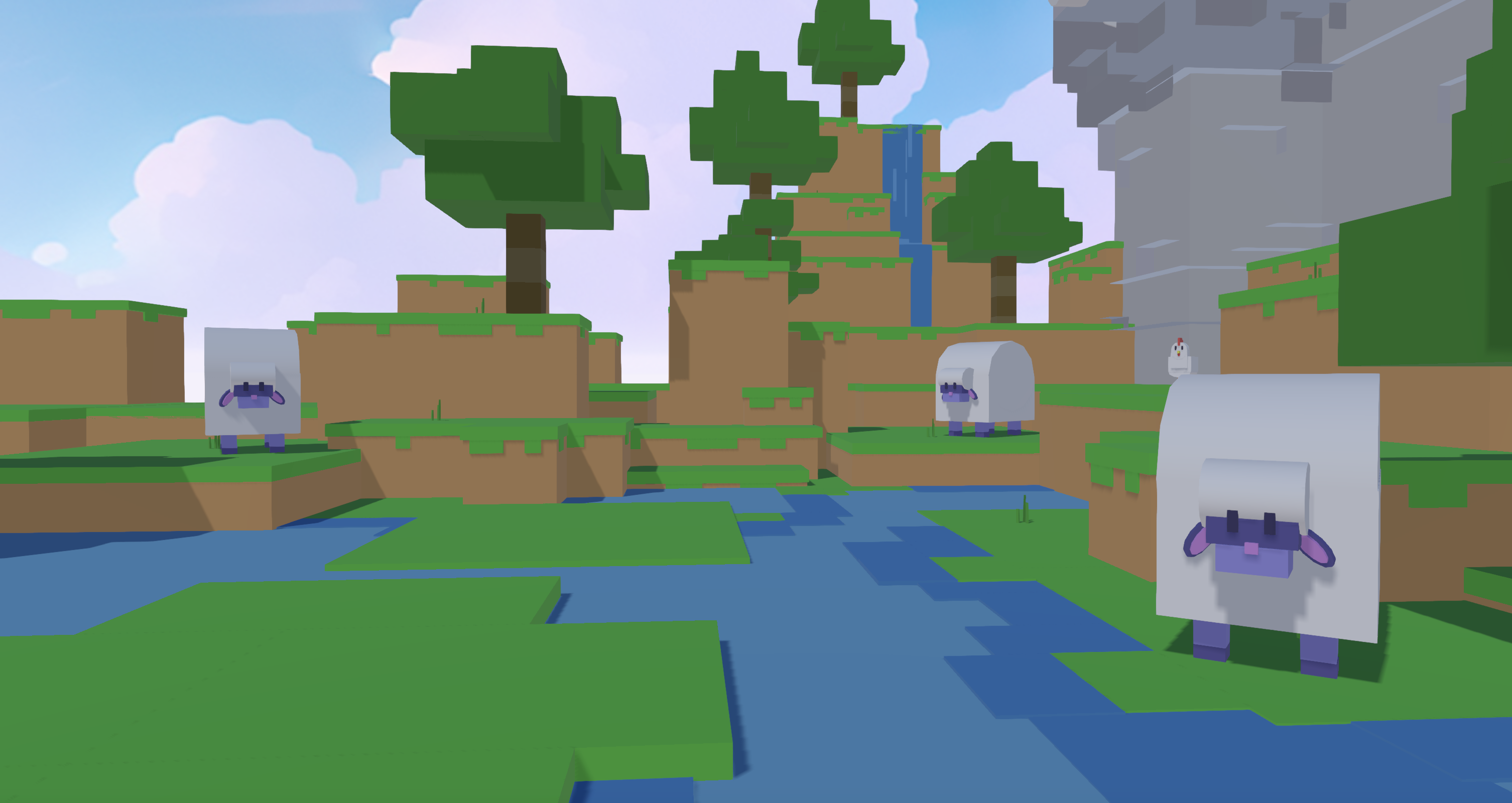
Roblox Studio now includes AI Assistant features for mesh generation and code help. You still need a desktop install and some Lua knowledge, so the learning curve can feel steep for aspiring builders or already builders like you.
Rosebud AI gives you vibe coding features for logic, but it does not include built-in 3D asset creation or LOD control. You need extra tools for modeling and triangle management.
Blender gives you full control over 3D modeling and retopology, but it takes months to learn well. Manual optimization slows you down and can break your creative flow.
Meshy creates detailed 3D assets quickly, yet often outputs very high triangle counts that go beyond Roblox limits. You then need separate optimization steps in tools like Blender.
When you compare tools, look for connected workflows that cover generation, optimization, and export without constant tool switching. Nilo’s 9,000+ Discord community shares Roblox-focused tips, example projects, and fixes for common performance issues.
Common Problems and How You Can Fix Them
High-Poly Lag: AI-generated assets often ignore Roblox triangle limits. Use LOD systems or set triangle budgets directly in your prompts. Nilo’s real-time view shows exactly how many triangles you remove as you adjust detail.
Broken Vibe Code: Only 20% of AI-generated code suggestions are accepted by Roblox engineers because of performance issues and missing context. Treat generated scripts as drafts. Test them carefully and prefer platforms that understand Roblox patterns like remote events and non-blocking loops.
Export Errors: Wrong file formats or missing UV maps often cause import failures. Use FBX for rigged models and keep texture sizes at or below 1024×1024 pixels to avoid problems.
Prompt Failures: Vague prompts usually give you messy results. Be specific instead. “Low-poly medieval sword, 2,000 triangles, metallic texture” gives the AI a clear target, while “cool sword” leaves too much room for guesswork.
Community builders often solve these problems faster when everything lives in one platform. As one builder shared in Nilo’s February 2026 Survey: “You can work 20 times faster than you usually work on models.”
Advanced Ways to Measure and Improve Your Builds
Tracking a few simple metrics helps you see whether your vibe coding and polycount workflow actually works:
-
Frame Rate: Aim for 60 FPS on mobile devices.
-
Triangle Count: Keep counts low for each asset and for the full scene.
-
Load Times: Test on slower connections and older phones.
-
Clean Imports: Make sure assets drop into Roblox Studio without manual fixes.
Once you feel comfortable, you can push into more advanced workflows. Create modular asset packs for tycoons and roleplay worlds, so you reuse pieces across games. Collaborate live with teammates and remix successful community builds instead of starting from zero each time. Nilo’s collaborative features support these workflows without complex setup or extra hosting tools.
Conclusion: Bring Vibe Coding and Polycounts Together
Mastering vibe code polycount Roblox workflows means pairing AI-powered creation with careful optimization. The 7-step process, from idea to export, helps your games stay smooth while you keep full creative control. Tools like Nilo reduce friction between your imagination and a playable world, so you can ship lag-free experiences much faster.
High-poly assets do not have to ruin your game’s performance. Build your first lag-free Roblox game inside Nilo’s open beta and see how far you can go.
FAQ
What is the maximum poly count for Roblox assets?
Roblox runs better when you keep triangle counts low for individual meshes and character models. Mobile devices need extra care, so watch both asset and scene totals. Keeping overall scene complexity low helps you maintain stable frame rates across different hardware.
Is vibe coding risky for Roblox development?
Vibe coding becomes risky when AI generates inefficient code or very dense meshes. Roblox engineers accept only 20% of AI-generated code suggestions because of issues like blocking calls in loops and poor structure. Platforms built around Roblox workflows reduce that risk with checks and smarter defaults. You still need to test AI-generated code and assets thoroughly before you publish.
Can I use vibe coding for free in Roblox?
Yes, several platforms let you try vibe coding without paying. Nilo gives you 1,000 free Bits each month for AI generation, asset cleanup, and Roblox export. Roblox Studio also includes AI Assistant features for code and mesh creation. Many advanced options and higher usage limits sit behind paid plans, so expect some tradeoffs.
How does Nilo compare to Meshy for Roblox assets?
Nilo focuses on Roblox-ready assets with built-in LOD control and direct export into Studio. Meshy creates detailed 3D models but often outputs very dense meshes that go past Roblox limits, so you need manual cleanup in Blender. Nilo covers the full path from generation to import, while Meshy usually needs extra tools for optimization and export.
What are the best practices for low-poly Roblox modeling?
Use low triangle counts for characters, props, and environments so your game stays responsive. Combine materials with texture atlases, simplify collision using Box or Hull settings, and keep UVs inside the 0–1 space. Test models on mobile devices and rely on LOD systems for complex scenes to protect your frame rate.
