
Key Takeaways
- Vibe coding lets you create Roblox models by chatting with AI instead of scripting or fixing meshes in Blender.
- The 5-step workflow — Prompt → Generate → Vibe Code → Optimize → Export — gives you Roblox-ready models with LOD, rigging, and clean FBX files.
- Nilo runs in your browser with WebGPU, real-time previews, multiplayer collaboration, and 1000 free monthly Bits.
- Compared to Roblox Studio, Blender, or Rosebud AI, Nilo focuses on faster creation, auto-optimization for 10k–20k triangles, and simple exports.
- You can start vibe coding a spinning, glowing sword today by joining Nilo’s open beta for free and trying a much faster workflow.
What Vibe Coding and Roblox Models Mean for You
Vibe coding means you create games through natural conversation with AI instead of traditional programming. You tell the AI what you want, like “make this sword spin and glow when touched,” and it generates working code with real-time 3D feedback. Roblox models are 3D assets such as characters, weapons, and props that fill your worlds, while LOD (Level of Detail) automatically simplifies polygon counts for performance.
The complete workflow follows five steps: Prompt → Generate → Vibe Code Behavior → Optimize → Export. Nilo stands out as a browser-based platform that needs no installation and gives you 1000 free Bits monthly for generation and export. This setup replaces the old pipeline where you bounce between Meshy for generation, Blender for cleanup, and Roblox Studio for implementation.
Why Roblox Builders Like You Benefit from Vibe Coding
The Roblox ecosystem hosts over 28,000 active builders, and many of them feel a big gap between ideas and finished games. Browser technology through WebGPU and recent AI advances now let you create serious 3D content without heavy desktop software. Roblox’s 2025 R&D investments reached $1.568 billion, spread across AI, infrastructure, and tools, which shows how strongly the platform backs AI-assisted creation.
Traditional tools slow you down. Roblox Studio needs installation and scripting skills. Blender takes months to learn. Prompt-only tools like Rosebud AI generate assets quickly but do not give you deep control for interactive behaviors or real-time testing. Nilo bridges this gap as a game engine first, so you can vibe code with real-time multiplayer collaboration and still get Roblox-optimized exports. Roblox Corporation’s own AI tools now let you generate working game objects from natural language, which confirms that vibe coding is the direction the industry is moving toward. According to Nilo’s February 2026 Survey, 93% of builders recommend the platform to friends, with 82% rating their experience as “Awesome” or “Good” while working up to 20x faster than traditional workflows.
Five-Step Workflow for Roblox-Ready Models
Step 1 – Get Set Up in Nilo (Browser, No Install)
Go to play.nilo.io and create your free account. You receive a monthly Bit allocation for AI generation and exports, and you do not need a credit card. The interface loads in your browser with full 3D support powered by WebGPU, so you skip installers and jump straight into building.
Step 2 – Generate Your Model with Clear Prompts
Use specific, Roblox-focused prompts to get cleaner results. You can try lines like “Low-poly spinning sword for Roblox obby, 10k triangles, metallic texture” or “Glowing crystal staff with particle effects, optimized for mobile Roblox.” Nilo accepts text descriptions, sketches, or reference images, so you can start from whatever you have.
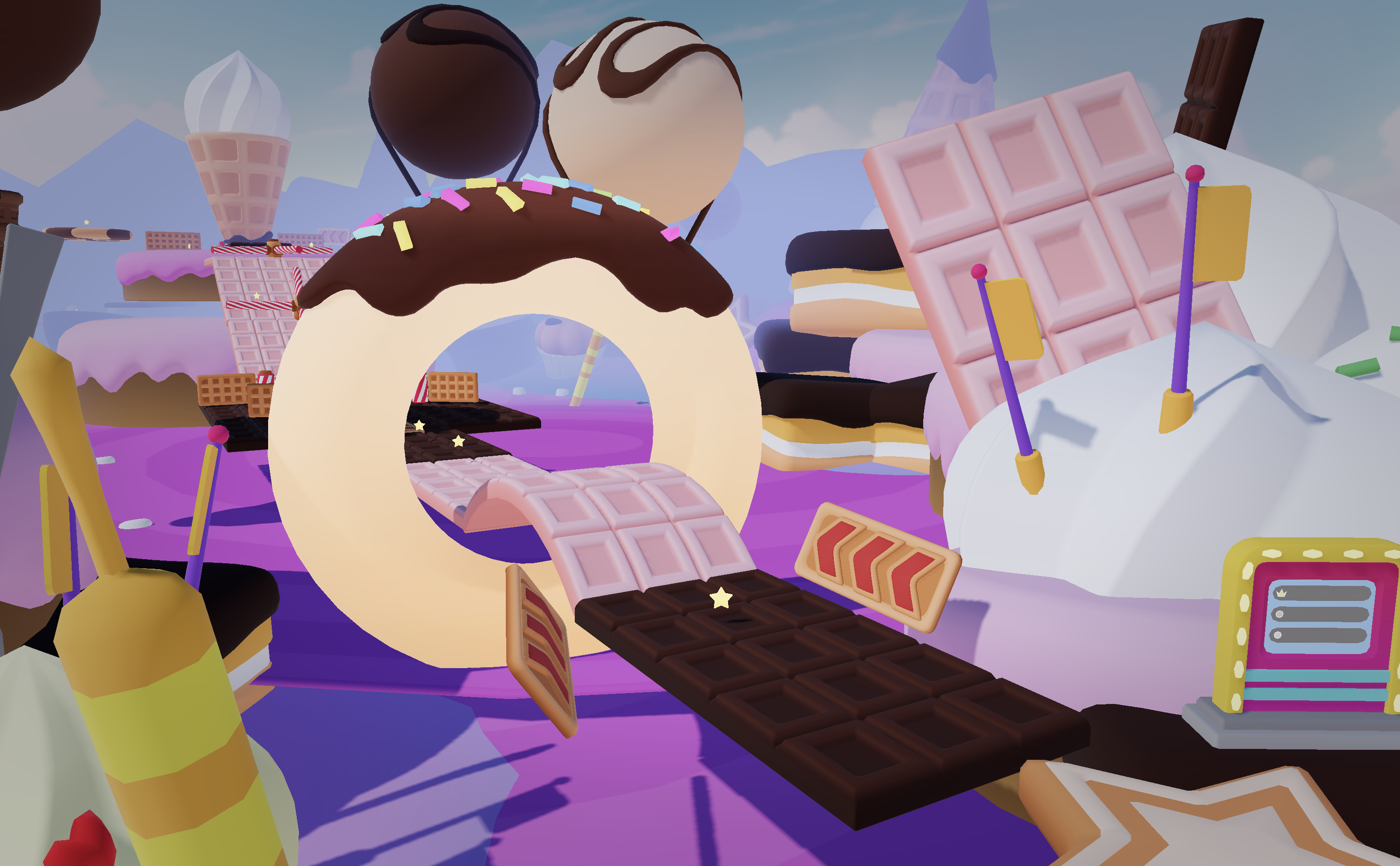
The platform connects to several AI providers such as Meshy, Tripo, and Cartwheel through one interface. Nilo then picks the model that fits your request best, so you do not have to juggle different tools yourself.
Step 3 – Vibe Code Behaviors in Plain Language
This step is where vibe coding feels most natural. In Nilo’s natural language editor, you type something like “Make sword glow blue on touch, spin at speed=20, add bounce physics when dropped.” The AI turns that description into working code and shows you the result in your 3D world right away.
You see changes instantly and can tweak variables directly. Change “speed=20” to “speed=50” and watch the spin ramp up in real time. You do not need scripting knowledge, only clear descriptions of what you want your model to do.
Step 4 – Optimize and Rig Your Model
Use Nilo’s LOD slider to keep your model within Roblox’s triangle limits of 10,000–20,000 triangles or polygons. Once your polygon count looks good, you can add movement with one-click rigging by typing prompts like “Animate sword swing in 2-second loop.”
Behind the scenes, Nilo’s real-time retopology system cleans the mesh automatically. This cleanup removes the usual Blender grind that can eat hours for each asset and keeps your models ready for smooth export.
Step 5 – Export Cleanly to Roblox Studio
Click Export and download your FBX file with clean topology, proper pivots, and optimized polygon counts. Import the file into Roblox Studio, and the model works right away without extra fixes. You can drop your spinning, glowing sword into a simple obby and confirm that every behavior runs as expected.
This full journey from first prompt to playable asset usually takes minutes instead of the long, multi-tool process you may be used to.
How Nilo Compares to Other Creation Tools
The table below shows how Nilo’s end-to-end workflow stacks up against common tools across four key factors for Roblox models: creation speed, Roblox-focused optimization, export reliability, and collaboration support.
| Tool | Speed | Roblox Optimization | Export Ease | Collaboration |
|---|---|---|---|---|
| Nilo | Minutes (end-to-end) | LOD auto (20k triangles) | One-click FBX | Real-time multiplayer |
| Roblox Studio | Hours (manual scripting) | Manual unions | Native | Team Create |
| Blender | Days (retopology) | Manual LOD | FBX (frequent errors) | None |
| Rosebud AI | Fast generation | Poor (no engine depth) | Limited formats | None |
When you pick tools for Roblox models, you should weigh how they balance speed with Roblox optimization, export reliability, and collaboration features. Look for real-time feedback so you can tweak models quickly, check post-export polygon counts to stay under limits, and see whether you can build with friends easily. Nilo keeps these trade-offs simple with a single, browser-based workflow that stays hands-on and transparent.
Common Issues You May Hit and How to Handle Them
AI-generated code can sometimes behave in strange ways, but real-time feedback helps you catch problems fast. You can adjust your prompts, test again, and avoid endless full regenerations. Performance constraints from Roblox’s triangle limits get handled by the LOD system, which keeps your assets light enough for smooth gameplay.
For stronger results, write precise prompts such as “low-poly, 10k triangles, Roblox-optimized” and iterate while you see the model in 3D. This loop keeps your creative flow going instead of dragging you into technical menus. As mentioned in the survey data earlier, builders using Nilo report smoother experiences and faster progress when they work this way.
Join Nilo’s open beta and try building and playing for free so you can feel how vibe coding removes many classic frustrations while you stay in control of your ideas.
FAQ
Can you vibe code Roblox games?
Vibe coding works well for Roblox game development. Using Nilo’s game engine, you can grow individual models into full experiences such as obbies, tycoons, or showcase worlds. The natural language interface generates both 3D assets and interactive behaviors, so you can build playable games without learning traditional scripting.
What tool works best for Roblox vibe coding?
Nilo stands out for Roblox-focused vibe coding because it mixes AI generation with automatic handling of Roblox performance needs and smooth export. Unlike prompt-only tools, Nilo gives you a complete game engine where you can build, test, and iterate in real time before sending assets to Roblox Studio.
Is vibe coding illegal in Roblox?
Vibe coding is legal and supported on Roblox. The platform encourages AI-assisted development and invests heavily in AI tools. Assets you create through vibe coding belong to you, and you can use, publish, and monetize them on the Roblox Marketplace or inside your own experiences.
How does Nilo compare to Rosebud AI for game creation?
Rosebud AI focuses on turning prompts into games quickly, while Nilo gives you deeper engine control and more room to experiment. You build inside a 3D environment with real-time feedback, collaboration features, and hands-on iteration. Nilo’s approach gives you creative superpowers instead of trying to replace your input entirely.
What vibe coding prompts work well for Roblox models?
Strong Roblox vibe coding prompts spell out style, triangle count, and how you plan to use the model. For example, you can try “Low-poly medieval castle tower, 8k triangles, stone texture for Roblox RPG” or “Animated pet dragon, 12k triangles, colorful scales, follows player behavior.” Always include “Roblox-optimized” and a target triangle count for more reliable results.
Conclusion: Start Vibe Coding Your Roblox Models
Vibe coding turns Roblox model creation from a grind into a conversation with AI about what you want to build. With Nilo’s full workflow, from prompts to export-ready assets, you can create polished models in minutes instead of hours. The 20x speed improvement mentioned earlier means you spend more time on ideas and less time wrestling with tools.
Join Nilo’s open beta and try building and playing for free to start vibe coding your own Roblox models today. You can also connect with 9,000+ aspiring builders and already builders like you in the Discord community who are reshaping their creative workflows with AI-native game development.
