
Key Takeaways
- Vibe coding Roblox uses natural language prompts to generate Lua scripts quickly, but bloated code can drop FPS from 90 to 10.
- Roblox performance usually breaks from CPU-heavy loops and GPU limits from high triangle counts over 20,000.
- Strong fixes include event-based prompts, anchoring static objects, enabling StreamingEnabled, and watching MicroProfiler while you test.
- Nilo’s built-in LOD tools and Roblox exporter handle polycounts and script efficiency so you can stay near 60 FPS.
- Try Nilo’s AI-native performance tools to build lag-free Roblox worlds with vibe coding.
How Vibe Coding Works in Roblox
Vibe coding Roblox means you talk to an AI about your game and it writes the Lua for you. You say something like “make the player jump higher when they touch the green part,” and the tool instantly creates the script. You build by describing what you want instead of wrestling with syntax and APIs.
This style speeds up obby and roleplay builds a lot, but many vibe coding tools spit out heavy code that lags. Common issues include loops like while true do wait() end that run every frame and crush performance.
The real challenge is not vibe coding itself. The hard part is getting AI to generate scripts that feel smooth and responsive inside Roblox Studio. Start vibe coding with performance in mind using Nilo’s open beta.

Roblox Performance Basics: CPU vs GPU Bottlenecks
To see why some AI code lags, you need a quick picture of Roblox performance limits. Roblox targets 60 FPS but has strict constraints: around 20,000 triangles and 1024×1024 textures per model. Knowing whether your game is CPU-bound or GPU-bound tells you which fixes matter most.
CPU-heavy scenarios: Script loops, event handling, and physics work hit the CPU hardest. Infinite loops and constant polling cause the worst lag. When your game is CPU-bound, render jobs spike on the CPU while the GPU sits underused.
GPU-heavy scenarios: High polygon counts, complex lighting, and lots of transparency stress the GPU. GPU-bound games show high GPU frame time while render CPU time stays lower.
The table below highlights three key thresholds. Going past any of these usually creates visible FPS drops, especially on mid-range devices.
| Performance Factor | Limit/Target | FPS Impact |
|---|---|---|
| Triangle Count | <20,000 | Can fall from 90 FPS to 10 FPS when exceeded |
| Script Loops | Event-based | Infinite loops create severe lag and stutters |
| Part Count | Under 30,000 | Helps keep standard Roblox builds smooth |
Most vibe-coded games hit CPU bottlenecks first because of inefficient AI-generated scripts. Start building with Nilo’s performance-aware vibe coding to avoid those traps.
Typical Lag Problems From Vibe Coding
AI code generation tends to create two main types of performance problems: memory issues and execution overload. Memory leaks from poor garbage collection and uncleaned connections slowly eat RAM and make long sessions choppy. High part counts over 10,000 and unanchored static objects force Roblox to run physics on things that never move.
Popular vibe coding tools such as Rosebud AI focus on speed, so you get working code fast but not tuned for Roblox limits. Infinite loops that never end are especially common in beginner AI scripts and can freeze your game completely.
You can fix these issues with clear prompts and better tools. You do not need to become a Lua pro. You need a simple checklist and an editor that respects Roblox’s constraints.
7 Practical Steps to Make Vibe-Coded Roblox Games Run Smoothly
These seven steps help you turn a laggy vibe-coded project into a smooth 60 FPS experience. Each step targets a specific bottleneck that AI scripts often create. Test changes on your target devices so you can see how much FPS improves.
1. Prompt for Event-Based Logic
Ask for events instead of constant checks. For example, say “detect when the player touches the door part” instead of “keep checking if the player is near the door.” Event-driven scripts remove loops that run every frame. This single change can raise FPS from around 30 to about 50 in busy scenes.
2. Use Tools That Auto-Reduce Polygon Counts
Pick tools with built-in Level of Detail systems that lower triangle counts for far objects. LOD means close objects stay detailed while distant ones use simpler meshes. Nilo keeps polycount low enough that models drop into Roblox Studio without extra cleanup, helping you stay under the triangle count mentioned earlier.
3. Anchor Every Static Object
Unanchored parts that never move still get full physics, which wastes CPU time. Tell your AI “anchor all decorative parts” or “make non-moving objects static” so Roblox can skip physics on them.
4. Turn On StreamingEnabled for Large Maps
StreamingEnabled loads only the parts near the player instead of the whole world at once. This keeps memory use lower and helps your game stay stable across phones, tablets, and laptops.
5. Watch MicroProfiler While You Test
Open the F9 Developer Console and MicroProfiler to see where time goes each frame. Look for spikes, script errors, and high memory usage. When you spot a slow script, refine your prompt and regenerate that piece instead of guessing.
6. Test on Low-End Devices First
Use wait() in loops with real delays so slower hardware can keep up. Aim for 60 FPS on integrated graphics, not just gaming PCs. Try your game on phones and older laptops so your friends can play smoothly too.
7. Export With Built-In Optimization
Choose platforms that export assets already tuned for Roblox limits. Manual cleanup in Blender can take two or three hours per asset. Automatic optimization finishes in seconds and keeps your focus on building.
Try Nilo’s automatic optimization tools if you want these steps handled for you during export.
How Nilo Helps Your Vibe-Coded Roblox Games Run Faster
Nilo combines vibe coding with performance-aware tools inside a browser-based editor. You type prompts like “create a jumping puzzle with moving platforms,” and Nilo builds the logic with clear variables such as speed = 20 that you can tweak. A built-in LOD slider adjusts polygon counts, and the Roblox exporter keeps models in the 10,000 to 20,000 triangle range.
Nilo lets you build inside a 3D scene with real-time physics instead of only sending prompts. Your flow becomes simple: prompt, build, tune, then export. You skip Blender detours, manual retopology, and constant polycount checks. One builder in Nilo’s February 2026 survey said, “I do not have to spend hours on 3D modeling the simplest things, now I can use Nilo and do it in 15 seconds.”
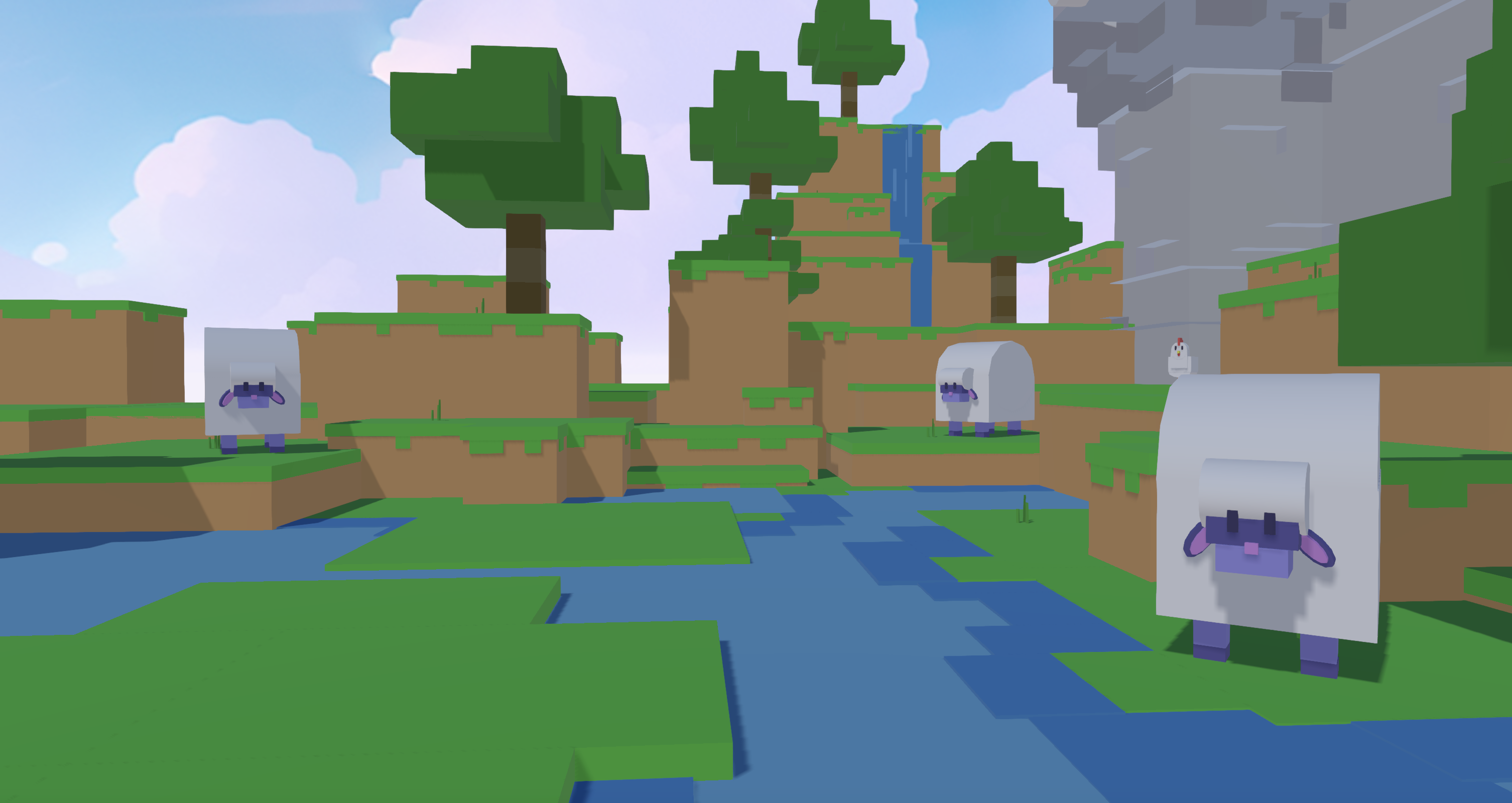
The platform connects to several AI providers behind one interface, so you do not need to jump between tools. With over 9,000 Discord members and 93% saying they would recommend it to a friend, Nilo shows that vibe coding can feel both fun and smooth to play.
Performance Gains From Smarter Vibe Coding
Smarter vibe coding workflows can deliver clear FPS gains when you compare triangle counts and script behavior. On a mid-range laptop, generic AI tools often create models with 30,000 or more triangles and heavy loops, which can drop FPS into the 25 to 35 range. When you use Nilo’s automatic optimization, models usually stay under 15,000 triangles and avoid constant polling, so FPS often lands between 50 and 60.
Manual cleanup in Blender can reach similar triangle counts and FPS, but you might spend two or three hours per asset. Nilo’s export runs in seconds, so you can iterate on gameplay instead of mesh cleanup.
Conclusion: Keep Vibe Coding, Lose the Lag
Vibe coding lets you build Roblox games without deep Lua knowledge, but performance work decides whether your game feels playable. The seven steps above, from event-based prompts to LOD and smart exports, can turn a stuttery 25 FPS obby into a smooth 60 FPS run.
Nilo helps automate many of these fixes so you can focus on ideas, not debugging loops and meshes. Join 9,000+ builders in Nilo’s open beta and start creating lag-free Roblox worlds.
FAQ
What is vibe coding Roblox?
Vibe coding Roblox means using natural language prompts to generate game scripts and assets. You describe what you want in plain English, and the AI creates working Lua logic for you. It feels like chatting with your game instead of writing every line by hand.
Why does vibe coding cause Roblox lag?
Many AI tools generate scripts with constant polling loops, high polygon counts, and heavy assets. These scripts check conditions every frame instead of using events, which pushes Roblox past its limits and can drop FPS from around 60 to under 30.
How can I get high FPS with vibe coding in Roblox?
Use event-based prompts, tools with automatic LOD, and exports tuned to Roblox’s triangle limits. Platforms such as Nilo reduce polygon counts and create performance-friendly scripts, so you avoid hours of manual cleanup.
Is Roblox more CPU or GPU heavy?
Roblox usually leans CPU-heavy because of scripts and physics, especially when AI-generated code uses inefficient loops. GPU bottlenecks show up when you push polygon counts and lighting too far. Most vibe coding issues come from CPU-intensive scripts, not graphics alone.
How does Nilo compare to other vibe coding tools for performance?
Nilo pairs vibe coding with built-in performance features such as LOD controls, Roblox-aware export limits, and its own game engine. Prompt-only tools focus on generation speed, while Nilo focuses on helping your creations run smoothly on many devices without deep manual optimization.
